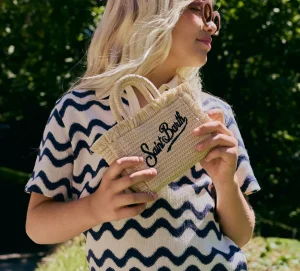
Not every style statement needs to announce itself. Sometimes it begins with something small, almost quiet: a square of fabric that doesn’t demand attention, yet inevitably reshapes the way everything else comes together. The scarf works exactly in this space between presence and discretion.
It’s never static. Its identity shifts depending on how it is worn, tied, or reimagined. More than an accessory, it becomes a gesture—open, flexible, constantly evolving.
Graphic clarity or soft expression
Graphic clarity or soft expression
Its visual language starts with print. Geometric patterns introduce clarity and structure, almost architectural in their rhythm. They bring definition to essential silhouettes, adding a subtle graphic tension without overwhelming the look.
Floral motifs move differently. They soften the composition, introducing movement and a more intuitive kind of elegance. Less constructed, more fluid, they bring a sense of ease that feels naturally contemporary.
Rather than opposing directions, these two aesthetics coexist within the same object. The scarf simply changes mood depending on how it is interpreted.
From detail to construction
From detail to construction
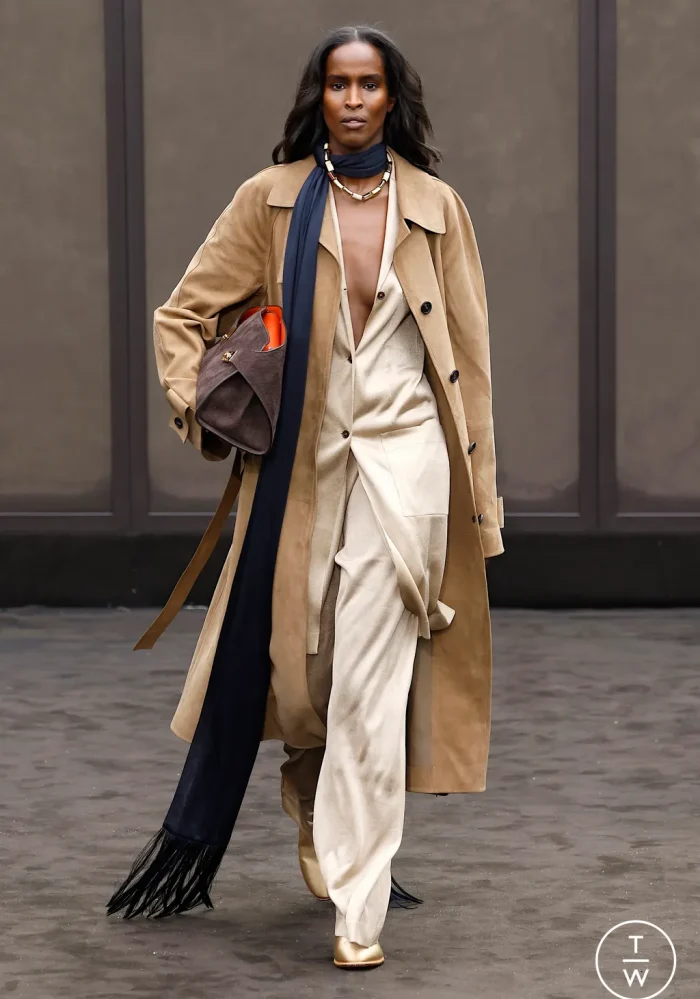
What makes the scarf so relevant today is its ability to move beyond its expected role. It can remain a finishing touch, but it can also become part of the structure itself.
Around the neck, it defines without dominating. In the hair, it adds motion and lightness. Attached to a bag, it becomes a quiet signature—personal, almost instinctive.
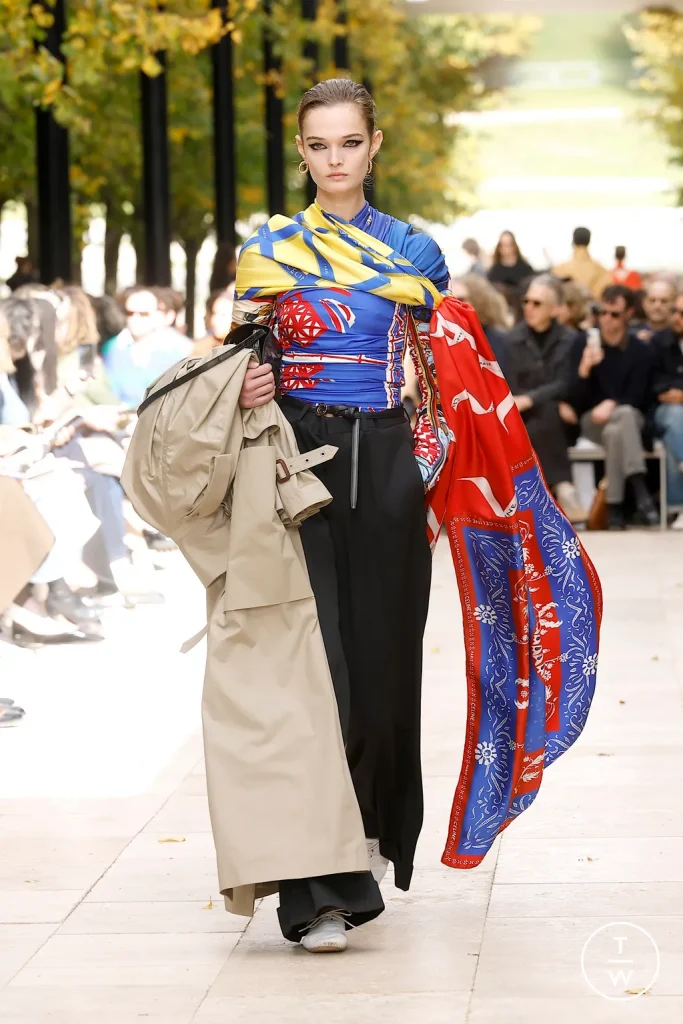
But its most interesting transformation happens when it steps into clothing territory. Knotted into tops, integrated into skirts, or assembled into coordinated pieces, it stops being an accessory and starts acting like a garment. The boundary disappears.
How it works now
How it works now
During the day, the approach is effortless. A loosely tied geometric scarf, clean tailoring, relaxed silhouettes. Or a floral version used almost casually, adding character without intention.
When the look becomes more defined, the scarf follows. Styled as a top with fluid trousers or structured tailoring, it introduces a sense of construction that still feels light and unforced.
In the evening, everything sharpens. Fabrics become more luminous, knots more precise, prints more present. Draped over the shoulders or integrated into an outfit, it becomes the focal point without ever feeling overworked.
Because ultimately, the scarf’s strength lies in its refusal to stay in one category. It doesn’t settle between accessory and garment, it moves freely between both, redefining the space in between.